
A dentist client is seeing patient intake forms where the answer to “Who referred you?” is ChatGPT. Academic programs are working to be the name AI assistants recommend when prospective students ask where to study. Residential communities are establishing an AI presence to capture the next wave of residents.
Across industries, our clients want to know more about the role of AI search in helping new audiences find them. It's something we're observing at Red Window, too, as we're hearing from potential clients outside our strongest geographic footprint who found us through AI chatbots.
Taking a snapshot of the client websites we monitor, the trend is apparent. Traffic coming directly from identifiable AI referrals increased 173.5% between June and October 2026, growing from 147 to 402 monthly sessions.

While those numbers are still relatively small compared with traditional search traffic, they tell us something important: AI search isn't just gathering information from websites and delivering answers without a click. It's also helping people discover organizations and find their way to websites where they can learn more and make a connection.
At Red Window, we've never looked at search engine optimization (SEO) as a stand-alone tactic. It informs everything from how we structure websites and publish news to how we approach video, media outreach, and online reviews. As AI changes the way search works, we're learning how to incorporate those changes into the communications strategies we're already developing with clients.
Here are five things we're watching.
1. AI search is opening new paths to discovery.
For years, competing for visibility in traditional search has required time, technical expertise, substantial content development, and often significant advertising budgets. In many industries, search results have been dominated by directories, aggregators, and organizations investing heavily in SEO.
AI-powered search is introducing new possibilities.
People can now explain what they're looking for in their own words, ask follow-up questions, and narrow their options based on specific needs. AI tools can draw on multiple sources to identify organizations that might be a good fit, sometimes surfacing websites that wouldn't appear prominently in a conventional search.
It's too early to know how much this will change the competitive landscape, and traditional search rankings still matter. But we're interested in the opportunity for organizations with specialized expertise, strong reputations, or distinctive offerings to be discovered in new ways.
2. Useful, thorough content is giving AI more to work with.
One of the clearest patterns we're seeing in our own data is that websites with substantial resource content are attracting more traffic from AI referrals.

Two of the strongest examples in our client portfolio are a local government and a professional association. They serve very different audiences, but both have websites built around providing useful information, answering questions, and helping people navigate specific topics.
This makes sense when you consider what people are asking AI to do. They're trying to understand complicated subjects, find specific answers, or narrow down their options.
As we plan new websites or look for opportunities to enhance existing ones, this reinforces the value of more in-depth content, including service pages, research, and helpful reference information.
Is it time to publish more of your organization’s news? One opportunity that hasn't always made sense for organizations to prioritize is a news section on their website. It takes time and resources to do this well. But news can be particularly useful for documenting accomplishments, milestones, and timely developments, providing specific examples that help establish an organization's story and expertise — both for human users and for search systems.
3. A consistent narrative across the internet is becoming more valuable.
In the branch of SEO focused on being found in “near me” searches, it's important to list your organization's name, address, and phone number consistently across the internet.
You can think about your organization's narrative the same way: making sure the most important talking points carry through your communications, even as you find creative new ways to tell your story.
AI-powered search can draw on information from websites, professional profiles, news coverage, reviews, and other online sources. We're also noticing that some AI search tools are surfacing facts and narratives from social media content, which hasn't traditionally played the same role in SEO.
A video interview on YouTube, a testimonial, a LinkedIn post, and an article in an industry publication may reach different audiences. But AI search tools can pull from across those varied sources to develop an answer relevant to what someone is searching for.
There's no guarantee that any particular mention will influence an AI-generated answer. But a clear, credible narrative supported by real examples makes sense for people and search alike.
4. The more generic content becomes, the more valuable real experiences are.
The more everything online seems fake, the better the opportunity for brands to show how they're real.
We're hearing from clients with AI-generated websites who want something that more distinctly represents their brand. We're also hearing from clients who value photography and video that clearly look like they were made in the real world, rather than generated, to represent their organizations.
Google's own guidance for AI-powered search emphasizes original content, firsthand experience, and information that offers something beyond what can easily be generated or repeated elsewhere.
It's an interesting opportunity to harness AI search for discovery while leaning more into the real world when it comes to building trust with audiences.
We’ve found this is one of the best applications of our video work, which leans more toward documentary style than sleek advertising. We help people who aren't professional actors feel comfortable on camera so they can talk naturally about what they do. You can hear their enthusiasm and get a sense of the people behind the organization.
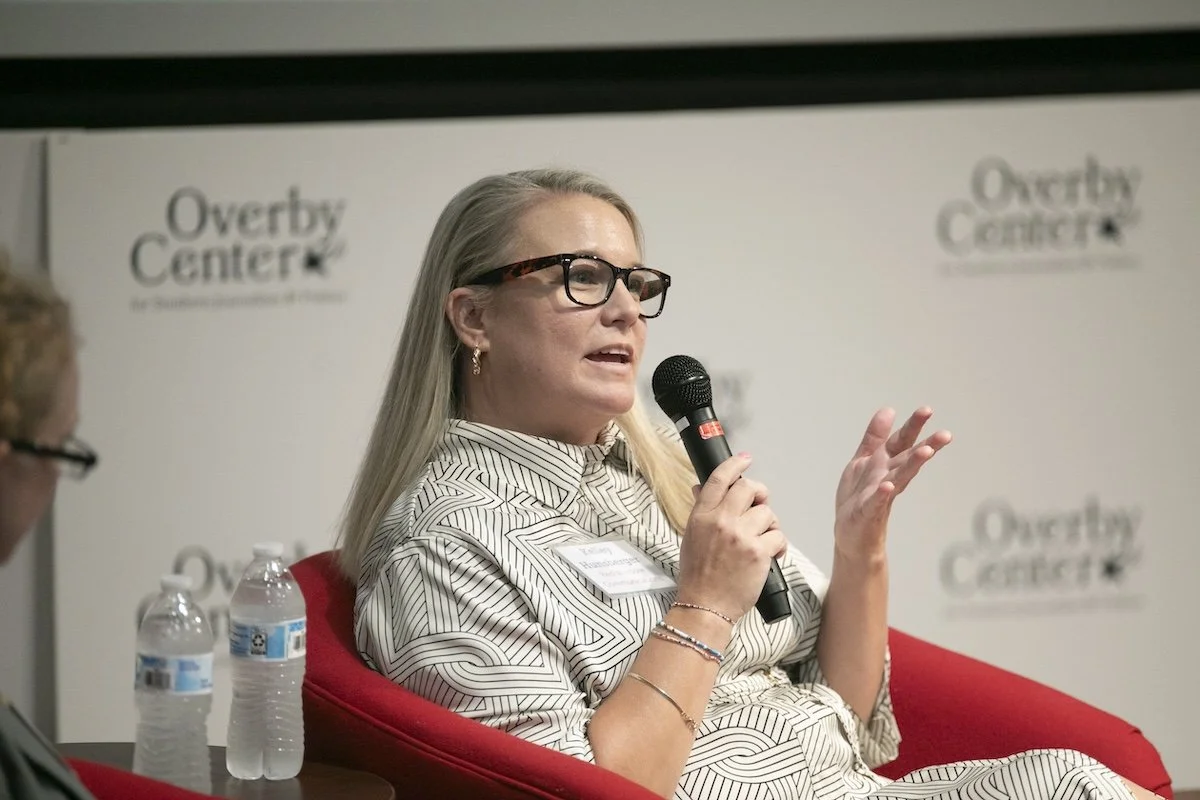
Documenting our clients' events and weaving those in-person experiences into their narrative is also valuable for building trust. (Whether you work with Red Window or not, hire a professional event photographer to tell the visual story of your next in-person event!)

5. Measuring what's working is getting more complicated, and more important.
Anyone who works with marketing data knows the challenge usually isn't a shortage of numbers. It's figuring out which numbers actually tell us something useful.
AI search adds another layer.
Sometimes an AI tool answers a question using information from a website without sending the person there. Other times, someone may discover an organization through AI search, then visit its website later, call directly, or reach out through another channel.
Because our work spans websites, advertising, social media, and other communications channels, we can compare what analytics platforms report with what clients are experiencing.
One opportunity worth considering for 2027 is taking a fresh look at how your organization captures information from new customers or clients.
A simple shift might be asking an open-ended question rather than requiring someone to select a referral source from a predetermined list. Giving people room to explain how they found you and why they chose you can reveal insights that a checkbox might miss.
Your ability to draw insights from this “unstructured” data is different from what it was in the past, because AI can assist you in finding the patterns and trends. That can be useful for organizations with a small number of high-value relationships, such as philanthropy, as well as those managing a higher volume of inquiries, such as healthcare organizations.
Online search will continue to change, but the better you can understand where valuable new relationships are coming from, the better you’ll be able to inform decisions about where to invest time and resources in marketing.
Looking ahead to 2027
AI search is evolving quickly, and we're continuing to learn how these changes can inform the communications strategies we're developing with our clients.
For some organizations, that may mean building on existing content programs or finding new ways to demonstrate their expertise across channels. For others, it may be time to revisit a website that no longer fully reflects their organization, its capabilities, or the way people are searching for what it offers.
If a website update or broader communications initiative is on your radar for the coming year, we'd welcome the opportunity to think through it together.